
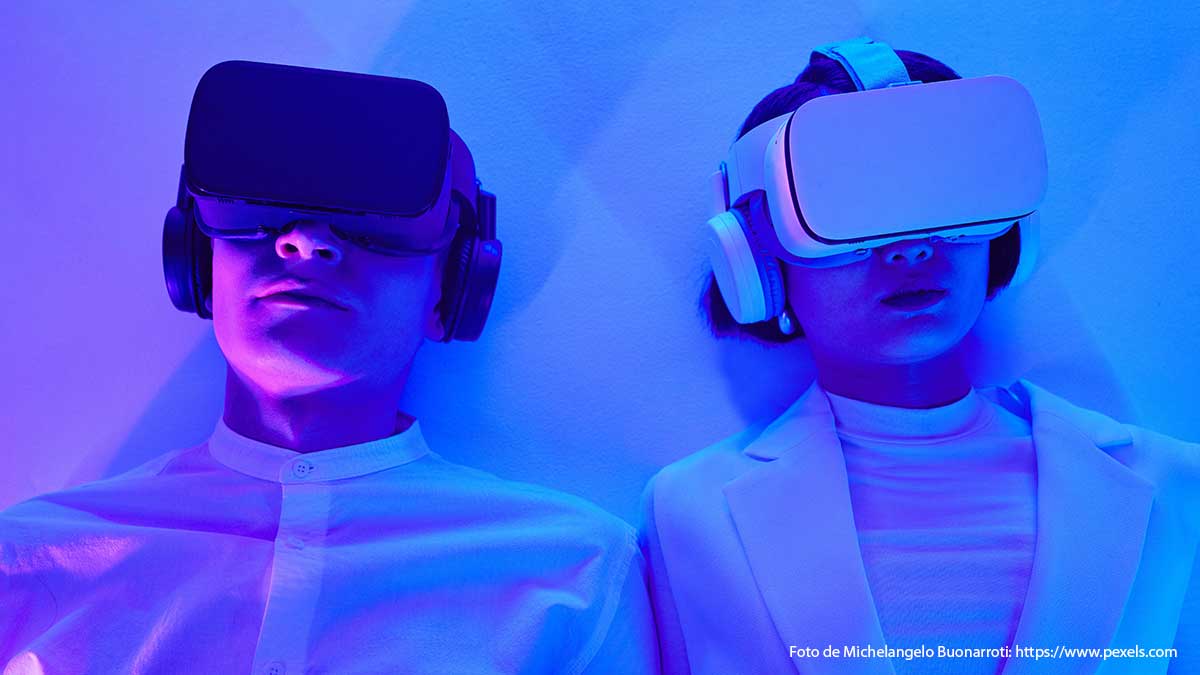
The Metaverse is being talked about as if it were science fiction. The new era of the internet, the web 3.0, is mentioned, and tech giants are investing billions of dollars in it, with many set to become millionaires and others already have spent millions on it.
What is the Metaverse?
This is the question everyone is asking, especially since October 2021, when Facebook CEO Mark Zuckerberg announced the Metaverse as the company’s new direction, going so far as to change the company’s name to Meta. Since then, it has been one of the companies investing the most money in this field.
So, what is the Metaverse?
Analysts define the Metaverse as a virtual space where we will go to entertain ourselves, study, work, and socialize. A place on the web where we can search for partners, attend virtual concerts, and meet people located anywhere in the world.
It sounds fascinating, but… isn’t this what we’re already doing from our devices? Aren’t we interacting with people from around the world from our cell phones, attending virtual courses from our PC, watching live concerts or webinars on YouTube, searching for partners through dating apps, and working remotely with virtual meeting platforms? What’s new?
A 3D experience
The way we operate our devices has shifted from keyboard and mouse to touch screen. They belong to a 2D environment. The Metaverse will bring a 3D environment and offer us a parallel existence, another world where we can live, learn, experience, and socialize in a 3D environment.
This is what’s fascinating about this new technology. There are already experiments of this kind where combat pilots are being trained by virtual tools present only in video games, doctors are practising surgeries remotely, seeing their patients in entirely virtual spaces, and entire buildings or factories are being recreated where we can take a tour of them without having laid the first brick. The novelty is that it will be massive and within reach of everyone, and that offers a giant technological challenge.
Interoperability
Just like the internet today, where connectivity is interoperable, meaning a web page can be opened on different types of browsers, laptops, desktops or mobile phones, I can download a video from a platform, edit it in a video application, and share it on WhatsApp or Instagram. This interoperability is one of the great challenges facing the Metaverse to become a massive tool.
Many have experienced games represented in 3D worlds such as Minecraft or Roblox, both with millions of users, that offer experiences very similar to what is thought of as the Metaverse; however, they are separate platforms. The Metaverse seeks to interconnect all these virtual worlds or interoperate with each other under the same standard, just as the web works today, where all web pages operate under an HTML, JavaScript protocol that is understood by all websites and all devices. The Metaverse still does not have a unified protocol that allows me as a user to jump from one virtual world to another with the ease with which we use the internet today.
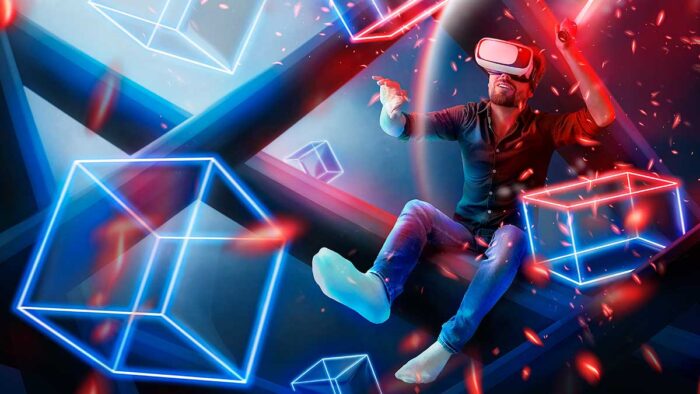
Real-time rendering
Now, if the Metaverse will move entirely in a 3D reality and be operated by millions of users worldwide. Can you imagine the hardware power, computing power and connectivity, that will require to be operational?
Rendering is the result of a computation process to produce an image. A computer with an acceptable graphics card takes several minutes to create a high-quality image, and video games need dedicated consoles for that task. Now imagine running a global web-based on 3D graphics and all the power that it will require.
The fascinating thing about this topic is the technological advance that is presented to overcome all these challenges. Recently, Unreal Engine, one of the most popular applications for video game production, released its version 5.0 with the Nanite technology, which allows for real-time rendering of high-detailed elements. A subject that deserves a separate article.
The economy of the Metaverse
It is estimated that the metaverse economy could have a value of between 6 and 13 trillion dollars and that financial transactions will be made within blockchain technology using cryptocurrencies, NFTs will be traded with which we can demonstrate our authorship and ownership of digital assets, and it will likely change the world’s financial system and the way the population is banked.
Not only is it a technological innovation, but it is also an economic innovation that will transform our culture, and our habits and no matter how much we resist it will come and change us forever. This is a topic that we will constantly explore in this blog, where we will keep up with all the news, and we will share it on these pages.

You have made som really good points there. I checked on the web for more info about the
issue and found most individuals will go along with your views on this website. http://Boyarka-Inform.com/